Early Life and Family Background
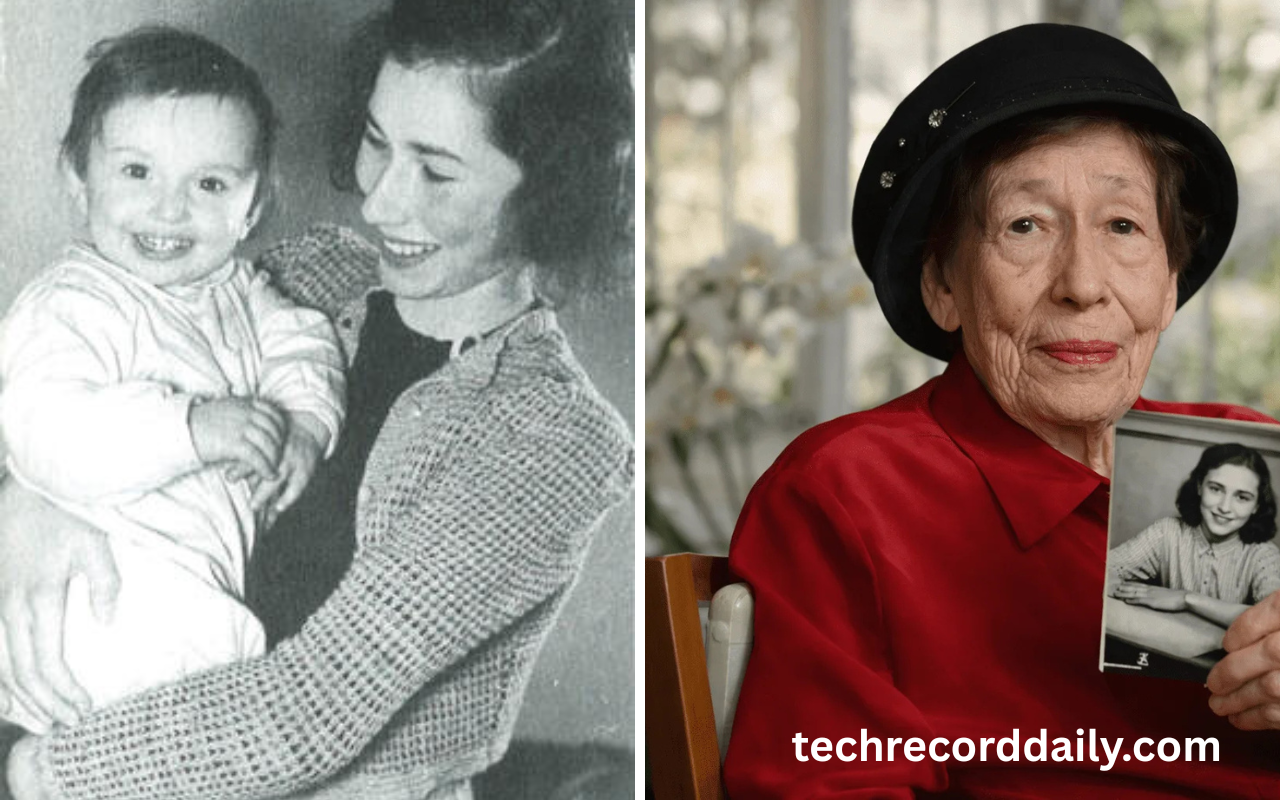
Gabi Goslar was born as Rachel Gabriele Ida Goslar in Amsterdam, Netherlands, into a Jewish family of German roots. Her parents had fled Germany during the rise of Nazism, seeking a safer life in the Netherlands. The family lived a relatively peaceful life in Amsterdam before the shadow of war touched their home. Gabi’s father, Hans Goslar, worked to maintain stability, while her mother, Ruth, nurtured the children with love and care. Their home was a reflection of cultural richness, education, and the hope of a secure future.
Tragically, Gabi’s early childhood was marked by profound loss. Her mother died giving birth to another child, leaving Gabi, then a toddler, dependent on her father and older sister Hannah. This early loss shaped Gabi’s life deeply, instilling in her an understanding of vulnerability and the fragility of family bonds. Despite the sorrow, her father and sister worked tirelessly to shield her from the growing threats that were spreading across Europe.
The Goslar family’s background was intertwined with both hope and historical upheaval. Their story represented the experiences of many Jewish families during the rise of Nazism. Education, cultural values, and familial love were central to Gabi’s early years, forming the foundation of resilience that would define her character in the darkest chapters of her life. This early life set the stage for her survival and the courage she would later demonstrate.
Childhood Amidst the Holocaust
Gabi’s childhood took a terrifying turn as the Nazi occupation reached the Netherlands. Her family, like many Dutch Jews, faced deportation, fear, and constant danger. In 1943, Gabi and her family were sent to Westerbork, a transit camp that served as a gateway to the horrors of the concentration camps. For a child of her age, every day brought uncertainty, hunger, and the trauma of witnessing human suffering in its most extreme form.
Eventually, Gabi, her sister Hannah, and their father were deported to Bergen-Belsen concentration camp. Conditions were brutal and dehumanizing. Hunger, disease, and despair pervaded camp life, and survival became a daily struggle. Despite her young age, Gabi endured the hardships of the camp, protected and nurtured by her sister Hannah. Their bond became a vital lifeline, offering comfort and hope amid the cruelty surrounding them.
Even as a child, Gabi’s experience in Bergen-Belsen was a formative lesson in the realities of human cruelty and resilience. Her memory of the camp, though fragmented by age, remained vivid, emphasizing the daily courage required to survive. These early experiences shaped her understanding of humanity, suffering, and the importance of remembering history accurately.
Survival and the Lost Train
As Allied forces advanced in early 1945, Nazis evacuated many concentration camps, leading to chaotic transports known as the “Lost Trains.” Gabi and Hannah were placed on one of these trains under dire conditions. Passengers suffered from starvation, exhaustion, and disease. Yet even in these extreme circumstances, the sisters remained together, relying on each other for support and survival.
The journey on the Lost Train was a harrowing experience. With the end of the war approaching, liberation seemed distant. Still, Gabi, supported by Hannah, endured the unbearable conditions. Every day on the train tested her will, her courage, and her capacity to cling to life despite overwhelming fear and uncertainty.
Liberation finally came when Soviet troops intercepted the train near Tröbitz, Germany. Gabi was weak and malnourished, yet alive. This moment marked a turning point, ending the immediate threat to her life but leaving deep emotional and psychological scars. The survival of Gabi Goslar became a testament to the strength of the human spirit in the face of near-certain death.
Bond with Sister Hannah and Connection to Anne Frank
Gabi’s sister, Hannah Pick-Goslar, had been a close childhood friend of Anne Frank. Hannah shared many experiences with Anne before the war, creating a historical and emotional connection for Gabi. Though she was too young to know Anne personally, Gabi’s life became intertwined with this narrative through her sister’s stories and memories, linking her indirectly to one of the most famous Holocaust testimonies.
The sisters’ relationship was one of profound devotion. Hannah’s care for Gabi in Bergen-Belsen and during the Lost Train ordeal was instrumental to Gabi’s survival. This protective bond illustrates the extraordinary lengths siblings went to safeguard each other, even under the most extreme conditions, highlighting the human capacity for love in the darkest times.
Gabi’s connection to Anne Frank through Hannah emphasizes the broader historical context of her survival. While Gabi’s story remained quieter in the public eye, it contributes to understanding the Holocaust’s personal impact. Her life underscores how even the youngest survivors experienced the intersection of personal tragedy and historical significance.
Post-War Recovery and New Beginnings
After liberation, Gabi faced the immense challenge of rebuilding her life. She and Hannah were initially placed in recovery homes to regain health and strength. The sisters were eventually reunited with surviving relatives, but the loss of parents and countless family members left an indelible mark. The post-war period became a time of healing, adaptation, and cautious hope for the future.
Gabi eventually moved to Israel, like many survivors seeking safety and a fresh start. In Israel, she built a life filled with family, community, and continuity of Jewish traditions. Marriage and motherhood allowed her to create stability after years of uncertainty. Her private life reflected resilience and determination, demonstrating the possibility of growth even after immense trauma.
The post-war era for Gabi was a journey of transformation. While memories of the Holocaust remained, she channeled her experiences into family life, nurturing a legacy that balanced remembrance with renewal. Her ability to rebuild demonstrates the strength of survivors in reclaiming agency over their lives after unimaginable loss.
Sharing Memories and Legacy
Although Gabi did not write a famous diary like Anne Frank, she documented her experiences through interviews and memoirs. Her reflections highlighted the perspective of a child who endured the Holocaust, providing unique insights into survival, sibling bonds, and the human capacity to overcome adversity. Her testimony adds depth to the collective memory of wartime experiences.
Gabi also contributed to Holocaust education through discussions, family storytelling, and participation in remembrance events. Her story became a resource for educators and historians seeking to convey the personal side of historical tragedies. The lessons she shared emphasized empathy, awareness, and the importance of preserving memory for future generations.
Through her words and life example, Gabi Goslar ensured that the human experiences behind historical events would not be forgotten. Her legacy emphasizes the need for personal narratives to complement historical data, reminding the world that every survivor’s story holds enduring significance and teaches timeless lessons about courage and hope.
Later Life and Dedication to Remembrance
In her later years, Gabi continued to honor the memory of those lost in the Holocaust. She participated in memorial ceremonies and commemorative projects, such as the installation of Stolpersteine in Amsterdam. These small, engraved stones memorialize victims of Nazi persecution and serve as daily reminders of history’s lessons.
Gabi’s dedication to remembrance extended beyond public ceremonies. She nurtured family memory, passing down stories of survival and resilience to the next generation. By doing so, she preserved the lessons of the past while fostering a personal and communal connection to history that could inspire empathy and vigilance in others.
Even in quiet moments, Gabi’s life remained a testament to perseverance and dignity. Her engagement in remembrance ensured that her experiences, and those of countless others, continued to educate, inspire, and resonate with a world still learning from the past. Her example reminds us of the enduring value of memory and the power of a single life to shape collective understanding.
Read more: Darah Trang: The Ancient Resin with Modern Relevance
Enduring Significance in Historical Education
Gabi Goslar’s life exemplifies the human dimensions of history. Through her survival, her bond with her sister, and her connection to figures like Anne Frank, she provides a lens into the experiences of children during the Holocaust. Her story is essential for historians, educators, and anyone seeking to understand the human cost of intolerance and hatred.
Her testimonies continue to be referenced in educational programs worldwide. The personal, intimate perspective she provides emphasizes the importance of memory, ensuring that history is not just a series of facts, but a vivid, lived experience. Students and scholars alike draw from her story to explore themes of resilience, family, and moral courage.
Ultimately, Gabi Goslar’s enduring significance lies in the lessons her life imparts. She embodies the potential for survival, renewal, and the transmission of memory. Her story reminds us that remembering the past is vital for shaping a compassionate and informed future, making her life an indispensable part of Holocaust education and human history.